The dig is the first big day of a pool build. A crew cuts the shell to the engineered plan, loads out the spoil and leaves a clean hole for the steel and plumbing that follow. In Queen Creek, two local factors shape that day: the town's pool permit and the caliche layer that runs under much of southern Arizona.
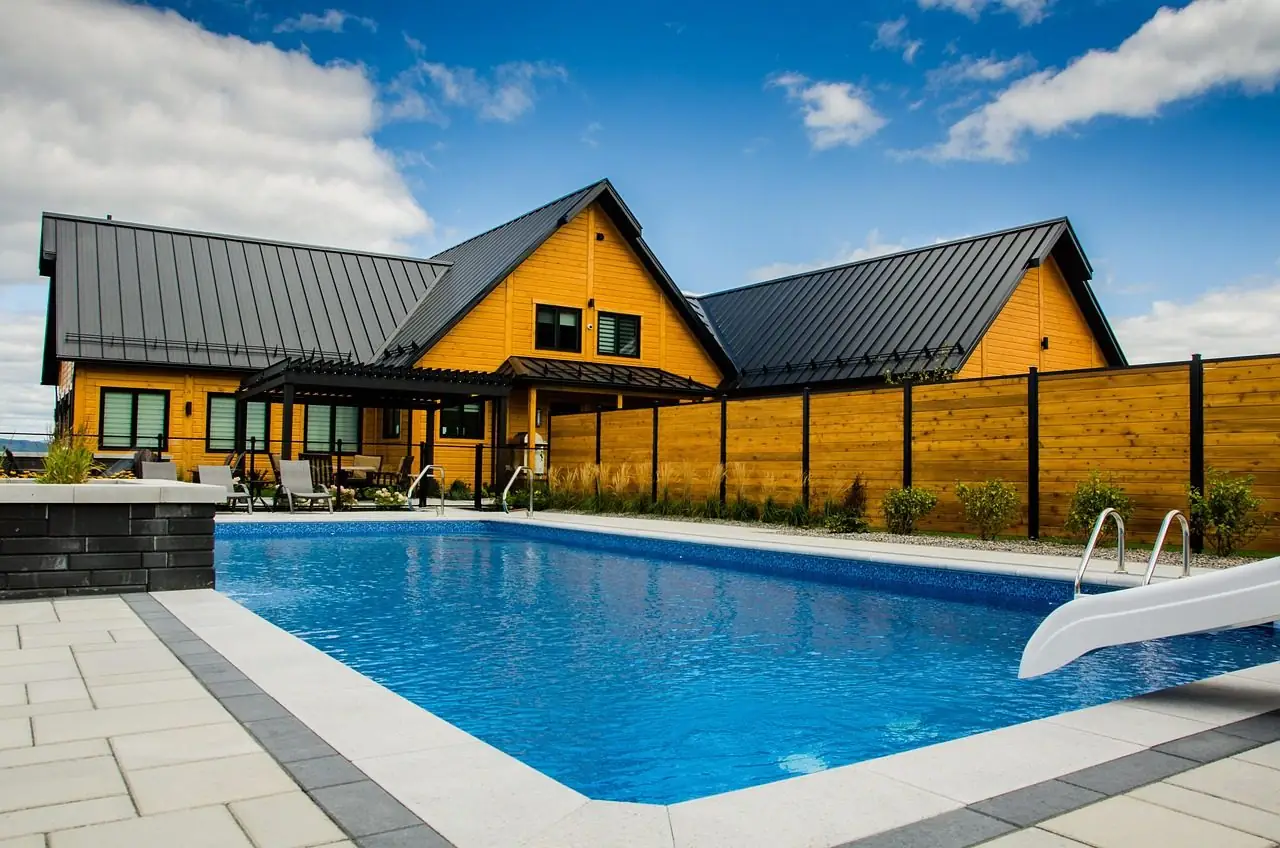
The permit comes first
Queen Creek's residential pool guidelines list what an in-ground pool permit needs: the application, a licensed contractor declaration, a dimensioned site plan, and engineered construction plans and calculations. On lots required to retain storm water, Development Engineering also reviews the site plan. Above-ground pools don't need the engineered plans.
The barrier is part of the same submittal. The site plan shows the pool fence and gates, wrought iron fencing must be at least 60 inches high, openings can't let a 4-inch sphere through, and doors that open to the pool area need a self-latching mechanism at least 54 inches above the floor.
What a dig costs
Angi's 2026 pool excavation guide puts the national average at $2,500, with most homeowners paying $500 to $3,020 and large pools or rocky sites reaching $4,500. Its figures by pool size:
| Pool size (ft) | Cubic yards | Angi estimate |
|---|---|---|
| 10 x 12 | 27 | $450 |
| 12 x 24 | 64 | $1,100 |
| 14 x 28 | 87 | $1,500 |
| 16 x 32 | 114 | $1,930 |
| 20 x 40 | 178 | $3,020 |
The same guide prices dirt at $8 to $25 per cubic yard and rocky ground at $40 to $100 per cubic yard, and notes that the full extent of rock may not be known until digging starts. That's the caliche question in a nutshell.
Working out the dirt
Angi's formula is simple: width times length times depth in feet, divided by 27, gives cubic yards. A 15 by 30 foot pool averaging 5 feet deep is 2,250 cubic feet, or about 83 cubic yards, by our arithmetic. That's a lot of material to haul or spread. Many excavators include removal in the quote. If you're handling it yourself, Angi lists dumpsters at $300 to $480, and up to $800 for a 40-yard box.
Caliche and the dig
The University of Arizona describes caliche as soil cemented by lime, usually a light-colored layer, from a few inches to several feet thick. Angi's Phoenix guide says hard, compacted caliche can need heavy-duty breakers. For a pool, ask:
- Does the price assume normal digging, and what's the rate if the crew hits caliche?
- Is haul-off included, and is there an allowance for extra volume?
- Who handles utility marking? See Arizona 811.
The caliche guide covers what it is and why it matters for drainage too.
Sources
- Town of Queen Creek: Residential Swimming Pool Permits Application Process Guidelines
- Angi: How much does pool excavation cost? (Scott Dylan Westerlund, updated October 19, 2026)
- Angi: Excavation costs in Phoenix, AZ (updated June 16, 2026)
- University of Arizona Cooperative Extension: Caliche Quick Guide (July 2025)
Reviewed October 20, 2026. Rules, prices and contacts change, so check the source before relying on it.
Questions and answers
How much does it cost to dig a pool in Queen Creek?
We don't have a Queen Creek price survey. Angi's 2026 national figures average $2,500, mostly $500 to $3,020, and up to $4,500 for large pools or rocky sites. Rocky ground runs $40 to $100 per cubic yard.
Do I need a permit for an in-ground pool in Queen Creek?
Yes. The town's pool guidelines list an application, a licensed contractor declaration, a dimensioned site plan, and engineered construction plans and calculations for in-ground pools.
How high must a pool fence be in Queen Creek?
Queen Creek's guidelines say wrought iron pool fencing must be at least 60 inches high, with openings that won't pass a 4-inch sphere.
Get your pool dig quoted
Send the form or call and a local excavation contractor will follow up. There's no charge to ask for a quote.
If you reach voicemail, leave your name, number, the property address and what you need dug, graded or cleared.